Magnetic Chuck: A Reliable Solution for Precision Machining with MF-CC-115-500
In today’s precision-driven manufacturing environment, holding a workpiece securely is just as important as cutting accuracy. A magnetic chuck plays a vital role in achieving stable, vibration-free machining, especially in grinding and milling operations. When paired with a dependable controller like the MF-CC-115-500, Electromagnetic Chuck Control, machining efficiency, safety, and consistency improve significantly.
This blog explores how magnetic chucks work, why
electromagnetic control matters, and how MF-CC-115-500 supports
high-performance machining applications.
What Is a Magnetic Chuck?
A magnetic chuck is a workholding device that uses magnetic
force to firmly hold ferrous materials during machining processes. Unlike
mechanical clamping, magnetic chucks provide even holding pressure across the
entire surface of the workpiece. This helps reduce distortion, improves surface
finish, and minimizes setup time.
Magnetic chucks are widely used in surface grinding, tool
rooms, and precision workshops where accuracy and repeatability are critical.
Understanding Electromagnetic Magnetic Chuck
Systems
An electromagnetic magnetic chuck operates using electrical
current to generate magnetic force. The strength of the magnetism can be
controlled, switched ON or OFF, and safely demagnetized when the job is
complete. This flexibility makes electromagnetic systems ideal for industrial
applications that demand control and reliability.
However, the performance of an electromagnetic chuck
heavily depends on its control unit this is where MF-CC-115-500 becomes
essential.
Role of MF-CC-115-500 Electromagnetic Chuck
Control
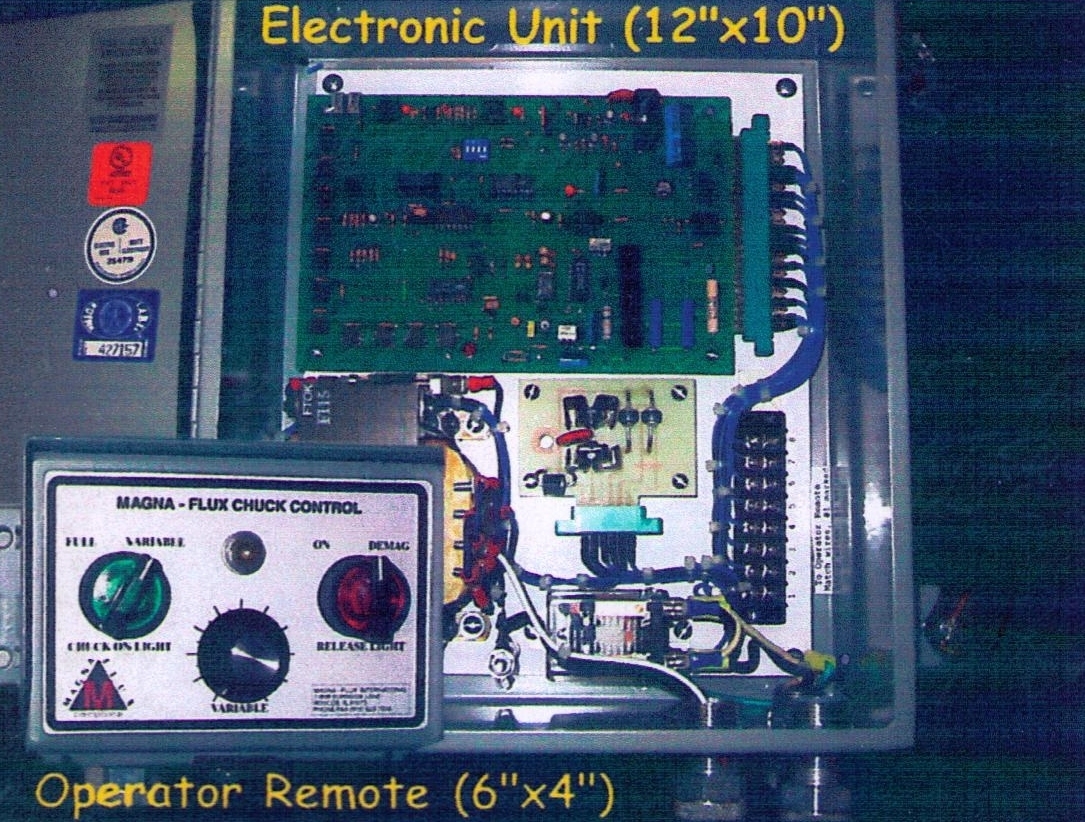
The MF-CC-115-500,
Electromagnetic Chuck Control is designed to regulate power supplied to
the magnetic chuck with precision and safety. It ensures stable magnetic output
during machining and controlled demagnetization after operation.
Key advantages include:
- Consistent
magnetic holding force for accurate machining
- Smooth
ON/OFF operation to prevent sudden workpiece movement
- Effective
demagnetization for easy part removal
- Improved
operator safety
- Reliable
performance in continuous industrial use
This control unit supports efficient operation of electromagnetic magnetic chuck systems, helping workshops maintain quality and productivity.
Benefits of Using a Magnetic Chuck with Proper
Control
Using a magnetic chuck along with a high-quality control
unit offers multiple benefits:
- Reduced
setup and clamping time
- Better
surface finish due to uniform holding
- Less
workpiece deformation
- Increased
machine uptime
- Enhanced
safety for operators
The MF-CC-115-500 ensures that these benefits are delivered
consistently across different machining cycles.
Applications of Magnetic Chuck Systems
Magnetic chucks supported by electromagnetic controls are
commonly used in:
- Surface
grinding machines
- Tool
and die manufacturing
- Precision
machining workshops
- Milling
and light cutting operations
- Industrial
production units
Their versatility makes them suitable for both small
workshops and large manufacturing facilities.
Frequently Asked Questions (Q&A)
Q1. What materials can be used with a magnetic
chuck?
Magnetic chucks are best suited for ferrous materials such
as steel, cast iron, and other iron-based alloys.
Q2. What is the function of an electromagnetic
chuck control?
It regulates electrical power to the chuck, allowing
controlled magnetization, demagnetization, and safe operation.
Q3. Is MF-CC-115-500 suitable for surface
grinding machines?
Yes, it is ideal for surface grinding and other precision
machining applications.
Q4. Why is demagnetization important?
Demagnetization removes residual magnetism, making it
easier and safer to remove the finished workpiece.
Q5. Does an electromagnetic magnetic chuck
improve accuracy?
Yes, uniform magnetic holding reduces vibration and
movement, leading to better accuracy and surface finish.
Call to Action
For trusted quality, expert support, and proven solutions, choose fifepearce for your electromagnetic chuck control requirements.



Comments
Post a Comment